For families
Grass, sunshine, and a rake from a wood
Hay is grass that has been cut and dried so that animals can eat it later, when the field is no longer green. The hurry in haymaking is the weather: the grass has to dry before the rain returns.
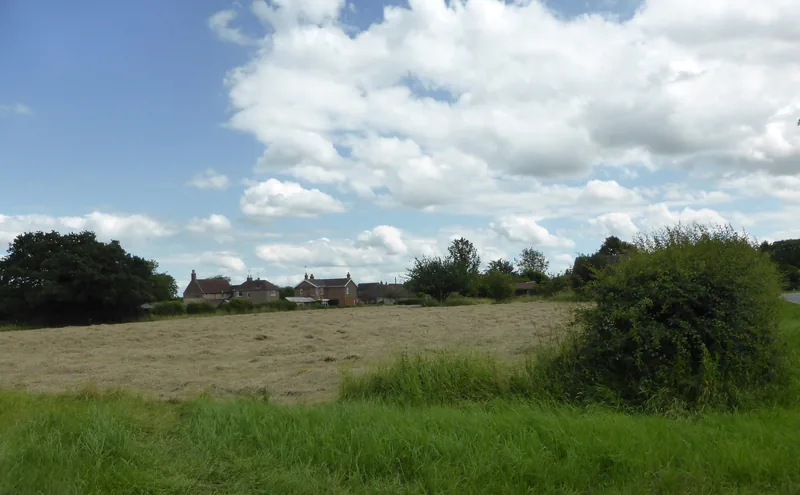
For a long time people cut that grass with a long curved blade called a scythe, standing up, instead of bending low with a small sickle. When the first machines arrived, someone still had to open a space in the field with a scythe, so the machine had room to start. An experienced worker could cut up to two acres of wheat in a day with one, which is a very long walk with a very sharp blade.
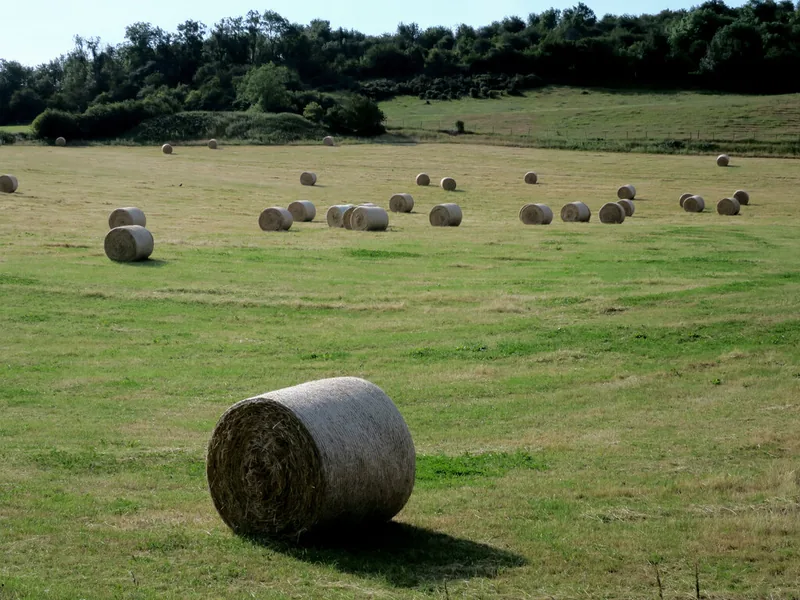
Some of the wooden rakes were made in a factory at Welnetham, in Suffolk, from trees grown in a wood about a mile away. That wood later became a nature reserve. The story of a rake can be a story about a factory, a fire, and a wood that was allowed to go back to being a wood. Other rakes were made on Bucklebury Common in Berkshire, by Harry Wells, who worked there for forty years. [source] [source]
In 1951, at the Festival of Britain, artists painted the whole country year on a merry-go-round. June was haymaking. The big pictures were later lost, but the Museum still has the drawings, so we can still see what June looked like. [source]
This site is for reading together, not for walking into a field of cut grass, or touching a scythe, without the farmer’s say-so. Hayfields are workplaces, and old blades are still sharp.
Keep exploring
Enjoyed the haymaking?
No pop-ups. No intrusive advertising. Just interesting stuff. A little support helps the next farmyard site get built.